Dave Lift
Sightseeing lifts turn movement into an experience, but every clear glass wall increases public expectations. Riders notice the skyline first. Engineers notice the risks.
What are the latest safety features in sightseeing lifts? This guide examines overspeed governors, emergency braking systems, door-edge sensors, load monitoring, and automatic rescue devices. It also considers backup power, two-way emergency communication, and real-time fault detection. In glass lifts, laminated panels, protective frames, and careful inspection schedules matter greatly. Glass changes everything. A small crack, unusual vibration, or delayed door response should never be treated as a minor issue.
Dr. Lutfi Al-Sharif, an elevator engineering specialist and author, has said, “The elevator is the safest form of transportation in the world.” That confidence depends on disciplined design, installation, maintenance, and passenger information. Modern systems can identify abnormal movement before a serious failure develops. Some connect with monitoring centers, allowing technicians to review temperature, vibration, and braking data. Accessibility features also deserve attention, including audible announcements, tactile controls, level floors, and adequate emergency lighting.
This article will compare leading sightseeing lifts planned for 2026 through a practical safety lens. It will examine how manufacturers combine mechanical protection with digital monitoring. Technology helps, but it is not perfect. Sensors can misread conditions, and maintenance quality can vary. That uncomfortable detail matters. Reliable safety comes from tested equipment, trained professionals, documented inspections, and clear emergency procedures. The most impressive lift is not merely the one with the widest view. It is the one that protects confidence throughout every ascent and descent.
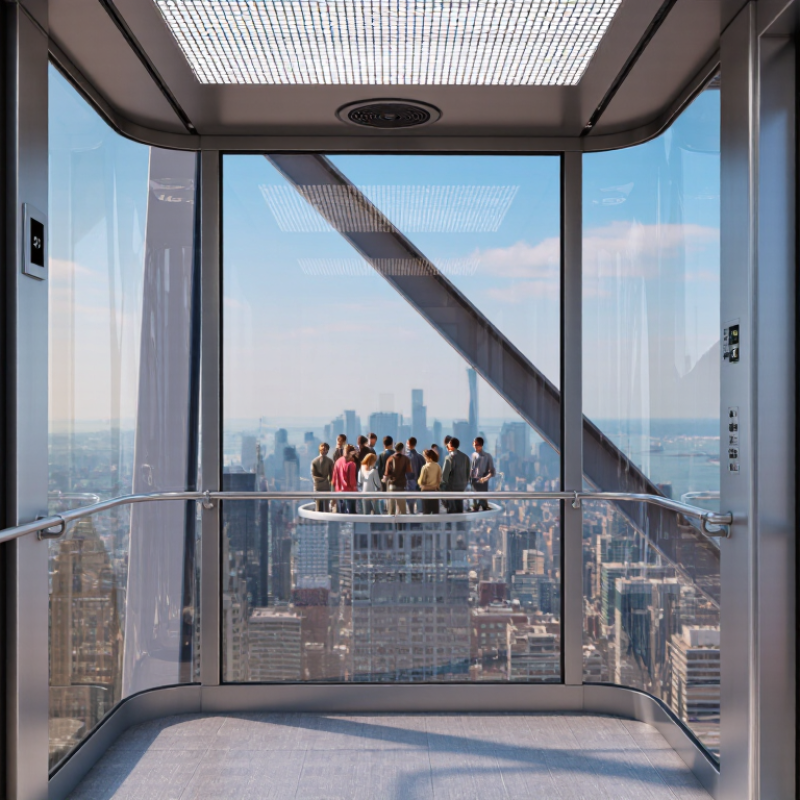
Sightseeing lifts are passenger elevators designed to make the journey part of the view. Their glazed cabins move through towers, cliffs, hotels, or public attractions, often along vertical or inclined guide rails. A traction motor lifts the cabin with ropes and counterweights, while some systems use hydraulic power or linear drives. Sensors track position, speed, door status, and load throughout each trip.
Modern safety design begins with controlled movement, not dramatic scenery. Overspeed governors can trigger mechanical brakes if the cabin moves too quickly. Door interlocks prevent travel when doors are not fully closed. Emergency communication, backup lighting, automatic rescue power, and smoke-resistant controls support passengers during faults or power failures. Many installations also use cameras, obstruction sensors, seismic monitoring, and remote diagnostics. These features help technicians identify unusual vibration or repeated door errors before a minor issue grows.
Still, technology is not a substitute for disciplined inspection. Clear operating instructions matter as much as hidden sensors, especially when visitors focus on a panoramic view. Capacity limits, handrails, non-slip floors, and accessible controls reduce everyday risks. Evacuation planning must match the structure, weather, and local regulations. Glass can look invincible. It is not. Engineers should review real operating data and passenger behavior, because even a well-designed lift may reveal weaknesses after opening.
A sightseeing lift is a passenger elevator designed with transparent or partially transparent walls, doors, or shafts to provide views during vertical travel.
| System or Safety Dimension | How a Sightseeing Lift Works | Typical 2026 Specification or Practice | Safety Benefit |
|---|---|---|---|
| Lift configuration | A transparent car travels vertically inside a dedicated shaft, often allowing passengers to view the building, landscape, or atrium. | Common arrangements include glass-sided cars, glass landing doors, panoramic shafts, and observation platforms. | Provides visibility while maintaining the physical separation required between passengers and moving equipment. |
| Hoisting method | Traction lifts use ropes or belts, a sheave, a motor, and a counterweight. Hydraulic lifts use a piston and fluid pressure to move the car. | Traction systems are generally preferred for taller travel distances and higher traffic; hydraulic systems are commonly used for lower-rise applications. | The selected system is matched to travel height, duty cycle, load, stopping accuracy, and building conditions. |
| Transparent enclosure | Laminated or otherwise safety-rated glass panels form part of the car, doors, or shaft enclosure while the structural frame carries the operating loads. | Glass selection, thickness, impact resistance, fixing method, and guarding details are determined by the applicable local lift and building regulations. | Reduces the risk of glass breakage, falling fragments, and contact with moving components. |
| Door interlocks | Electrical and mechanical interlocks prevent the lift from moving unless the car and landing doors are closed and locked. | Required at every accessible landing and on the car door where fitted. | Prevents operation with an open door and helps prevent passengers from entering an unoccupied shaft. |
| Door protection | A light curtain or presence-detection device creates an invisible safety zone across the entrance. | The doors reopen or stop closing when a person or object interrupts the detection field. | Helps reduce trapping and impact injuries during boarding and exiting. |
| Overspeed protection | A speed-monitoring device detects excessive downward or upward speed and can activate the safety gear or stop the drive. | Overspeed governors and car safety gear are specified according to the lift design and governing code. | Limits uncontrolled car movement and provides an independent layer of protection from the normal drive system. |
| Load monitoring | Load sensors measure the weight in the car and communicate with the controller. | The controller can prevent a heavily loaded car from starting and can provide an audible or visual overload warning. | Helps prevent overloading, excessive rope tension, poor leveling, and reduced braking performance. |
| Emergency braking | Service brakes stop the lift during normal operation, while an independent safety system is available for abnormal speed or control faults. | The braking arrangement is selected, tested, and maintained in accordance with the applicable lift safety standard. | Provides controlled stopping and an additional safeguard if the primary drive or control system fails. |
| Automatic rescue operation | If normal power fails, a backup supply can move the car to a suitable landing and open the doors when conditions are safe. | May use batteries, emergency power, or a building standby generator, depending on the design and local requirements. | Reduces the likelihood of passengers remaining trapped between floors after a power interruption. |
| Emergency communication | A two-way communication device connects occupants with a staffed response point or emergency service. | The system should remain available during a normal mains-power failure through a suitable backup supply. | Allows passengers to request assistance without opening doors or attempting an unsafe exit. |
| Fire and smoke response | Building fire controls can recall the lift to a designated floor, remove it from normal passenger service, or apply other programmed emergency functions. | The exact sequence depends on the building fire strategy and local fire and lift regulations. | Helps prevent passengers from being carried into smoke-affected floors during a fire event. |
| Leveling accuracy | Position sensors and the controller regulate the drive so the car stops close to the landing threshold. | The permitted stopping tolerance is defined by the applicable design requirements and commissioning tests. | Reduces trip hazards when passengers enter or leave the car. |
| Accessibility | Controls, doors, floor surfaces, visual indicators, and audible signals are arranged to support a wide range of users. | Accessibility provisions depend on the jurisdiction and may include tactile controls, audible announcements, visual status signals, handrails, and adequate maneuvering space. | Improves safe and independent use for passengers with mobility, vision, or hearing limitations. |
| Standards and inspection | The lift is designed, installed, tested, and maintained under the regulations adopted for its installation location. | Common reference frameworks include EN 81-20 and EN 81-50 in relevant European markets, or ASME A17.1/CSA B44 in relevant North American markets. | Independent inspection, scheduled maintenance, and documented testing help verify that protective systems remain functional. |
Note: Actual capacity, speed, travel height, glass construction, emergency systems, and inspection intervals vary according to the building design, local law, traffic requirements, and the applicable lift safety standard. “Best” should therefore be determined through a project-specific safety and compliance assessment rather than appearance alone.
The best sightseeing lifts in 2026 are defined by layered safety, not attractive cabins alone. During site reviews, engineers should check how each safeguard behaves under pressure. A smooth ride means little if an emergency response is unclear.
Redundant braking systems are essential. If one brake fails, another should hold the cabin securely. Overspeed governors can trigger braking before dangerous movement develops. Door interlocks must prevent travel when doors are not fully closed. Load sensors can detect overcrowding, uneven weight, or unusual cabin movement. These controls need regular testing, not just installation.
Clear evacuation plans matter equally. Emergency lowering systems should bring passengers to a safe landing during power loss. Two-way communication, interior lighting, and visible instructions reduce panic. Weather sensors can pause operation during strong winds, lightning, or poor visibility. Accessibility also deserves attention, including level boarding, handrails, and audible announcements.
Small details matter. Very much.
Independent inspections and maintenance records make safety claims more reliable. Operators should explain inspection intervals and train staff for medical incidents, stalled cabins, and sudden weather changes. Digital monitoring may identify faults early, but it cannot replace physical checks. A sensor can fail, and people can misunderstand alarms. That uncomfortable possibility deserves honest planning. The safest lift is not one that promises perfection; it is one designed to detect mistakes, limit consequences, and improve after every incident.
A sightseeing lift should be judged by more than its glass cabin or smooth ride. Evaluators examine acceleration, stopping accuracy, cabin stability, noise, and passenger flow. A lift that serves a crowded observation deck must remain reliable during repeated peak-hour cycles.
Safety testing includes door interlocks, emergency braking, overspeed protection, load sensors, and backup power. Inspectors also review evacuation procedures and maintenance records. Sensors are useful, but they cannot replace trained technicians and physical inspections. Weather matters too. Wind, heat, moisture, and temperature changes can affect cables, controls, and braking surfaces.
Tips: Request recent inspection reports and documented load-cycle testing. During a site visit, listen for unusual vibration and watch whether the cabin stops level with the floor. Ask how quickly trained staff can respond to a power failure. Do not judge performance from one quiet ride. That can be misleading.
A reliable system should show consistent results across normal and difficult conditions. Independent assessments add credibility, especially when performance claims come from sellers. Still, evaluation is not perfectly simple. A clean maintenance record may hide poor response training, while advanced software may create new service needs. I would compare test data, technician experience, passenger feedback, and emergency drills before making a decision. Small details matter.
A sightseeing lift must meet the safety rules used in its installation region. In North America, ASME A17.1/CSA B44 commonly governs design, construction, and installation. In Europe, EN 81-20 covers general safety requirements, while EN 81-50 addresses calculations, examinations, and testing. Local building codes and inspection laws still decide which edition applies. These standards address shaft clearances, landing doors, emergency systems, structural loads, controls, fire interfaces, and passenger protection. Transparent walls do not reduce these obligations.
Tips: Ask for the applicable code edition before approving drawings. Request load calculations, risk assessments, test records, and maintenance instructions. Confirm who performs acceptance inspections. Check whether local authorities require recurring examinations. Keep every certificate with the lift’s service history.
Design approval is only one stage. Inspectors should verify door locking, overspeed protection, emergency lighting, alarm communication, braking, and safe access for technicians. Weather exposure deserves attention on outdoor installations; water, dust, and temperature changes can affect sensors and electrical cabinets. Accessibility standards may also apply, including controls, floor accuracy, and audible signals. In practical reviews, a clean document package can still hide a poorly adjusted door. That is an uncomfortable reminder. Standards provide a framework, not a substitute for careful commissioning, competent inspection, and regular maintenance.
There is no single worldwide standard for sightseeing lifts. Design and installation requirements depend on the jurisdiction, while periodic inspection and maintenance are normally controlled by local regulations and the authority having jurisdiction. The standards below are widely referenced frameworks covering lift safety, accessibility, fire-related operation, calculations, testing, and installation principles. The years indicate the cited edition or publication year, not a ranking of safety performance.
Practical takeaway: A compliant sightseeing lift should be designed against the applicable national or regional code, installed and tested by qualified professionals, equipped with required emergency and protective systems, and subjected to inspections at the intervals prescribed by local law. The applicable authority should confirm the final standard edition, certification route, and inspection schedule before operation.
Choosing a sightseeing lift begins with risk, not appearance. Operators should assess passenger volume, glass exposure, weather, shaft depth, and evacuation access. The International Labour Organization estimates 2.78 million work-related deaths each year, including 2.4 million from work-related diseases. Maintenance decisions deserve serious attention.
Select equipment aligned with EN 81-20 and EN 81-50, or equivalent national requirements. Require door interlocks, overspeed governors, emergency braking, load monitoring, backup power, and two-way emergency communication.
For panoramic cabins, inspect glass panels, seals, lighting, and drainage. A beautiful cabin is still a safety system.
Keep a digital log of door cycles, fault codes, brake tests, and rescue drills. Inspect high-use lifts more frequently than calendar schedules suggest. Clean sensors carefully; dust can trigger false stops.
The 2023 ILO safety guidance supports worker training, hazard reporting, and preventive controls, not reactive repairs. Train attendants for calm passenger communication. Practice evacuation in darkness and power loss.
Do not trust a perfect dashboard. It can miss a loose connection or unusual vibration. Independent inspections should verify records, safety circuits, and actual stopping distances. Operators should review near misses monthly, even when nobody was injured. That uncomfortable review often reveals the next failure.
It is a passenger lift designed to make the journey part of the view. Its cabin may travel vertically or along inclined guide rails. Glass walls can reveal cliffs, towers, hotels, or public attractions. The view is memorable. Safety remains the main purpose.
Many systems use a traction motor, ropes, and counterweights. Other designs use hydraulic power or linear drives. Guide rails control the cabin’s path. Sensors monitor speed, position, doors, and passenger load. The system adjusts movement when conditions change.
Important features include door interlocks, overspeed governors, and emergency brakes. Backup lighting and emergency communication support passengers during failures. Rescue power can help move the cabin to a safe landing. Obstruction sensors reduce door-related risks. Glass is not invincible.
Inspectors examine acceleration, stopping accuracy, noise, stability, and passenger flow. They also test doors, brakes, load sensors, and backup power. The cabin should stop level with the floor. Listen for unusual vibration during a ride. One quiet trip proves little.
Wind, heat, moisture, and temperature changes can affect cables and controls. They may also influence braking surfaces and glass seals. Outdoor installations need weather-specific inspections and evacuation planning. Rainwater can collect near drainage points. Small details matter.
Operators should assess passenger volume, glass exposure, shaft depth, weather, and evacuation access. Capacity limits, handrails, non-slip floors, and accessible controls are important. Equipment should meet applicable safety requirements. A beautiful cabin is still a safety system. Appearance cannot replace risk assessment.
Operators should keep digital records of door cycles, faults, brake tests, and rescue drills. High-use lifts may need inspections more often than calendar schedules suggest. Sensors require careful cleaning because dust can cause false stops. Technicians should check unusual vibration and stopping distances. Dashboards can miss problems.
Staff should practice power-loss and darkness evacuations. They need calm instructions for crowded cabins and frightened visitors. Plans must match the building, weather, local rules, and rescue access. Independent inspections should verify records and safety circuits. Near misses deserve honest review.
Sightseeing lifts combine vertical transportation with panoramic viewing, using enclosed or glazed cabins, guide systems, drive equipment, control panels, and emergency communication devices to move passengers safely while offering clear views. What are the latest safety features in sightseeing lifts? In 2026, leading systems may include intelligent overload monitoring, multi-level door protection, anti-entrapment sensors, automatic leveling, emergency braking, backup power, fire-resistant materials, two-way communication, cabin surveillance, and real-time fault detection. These features are designed to reduce operational risks and support rapid responses during unusual conditions.
A reliable sightseeing lift should be evaluated through ride comfort, stopping accuracy, energy efficiency, noise levels, weather resistance, availability, and performance under expected passenger loads. Its design, installation, testing, and inspection should follow applicable safety codes and local regulatory requirements, with documented certification and regular professional assessments. Operators should select equipment suited to the site, climate, traffic volume, accessibility needs, and evacuation plan. Routine maintenance should include inspections of doors, cables or traction components, brakes, sensors, controls, emergency systems, and structural elements, supported by clear records and trained personnel.
