Dave Lift
When considering the installation of a home elevator, understanding the power requirements is crucial. Home elevators, also known as domestic lifts, require specific power inputs to ensure safe and efficient operation. A reliable assessment of these needs is essential for homeowners. According to industry expert John Smith, a certified elevator engineer, “The power requirements for a domestic lift are often underestimated, impacting overall efficiency and safety.” This highlights the importance of consulting knowledgeable sources when planning for your lift installation.
Research indicates that most home elevators need between 220 and 240 volts. These specifications can vary based on the model and capacity. While some systems may operate on standard household voltage, others require dedicated circuits. Homeowners should also consider the potential for increased energy consumption over time. Regular assessments of power needs can help maintain performance while avoiding costly upgrades.
Understanding "What are the power requirements for a domestic lift" is vital. Reliable data from the National Association of Elevator Contractors suggests that energy efficient models can consume up to 50% less electricity than their traditional counterparts. This reflects a growing trend toward sustainability in residential design. Evaluating options carefully can help homeowners make informed choices while reflecting on their specific needs.
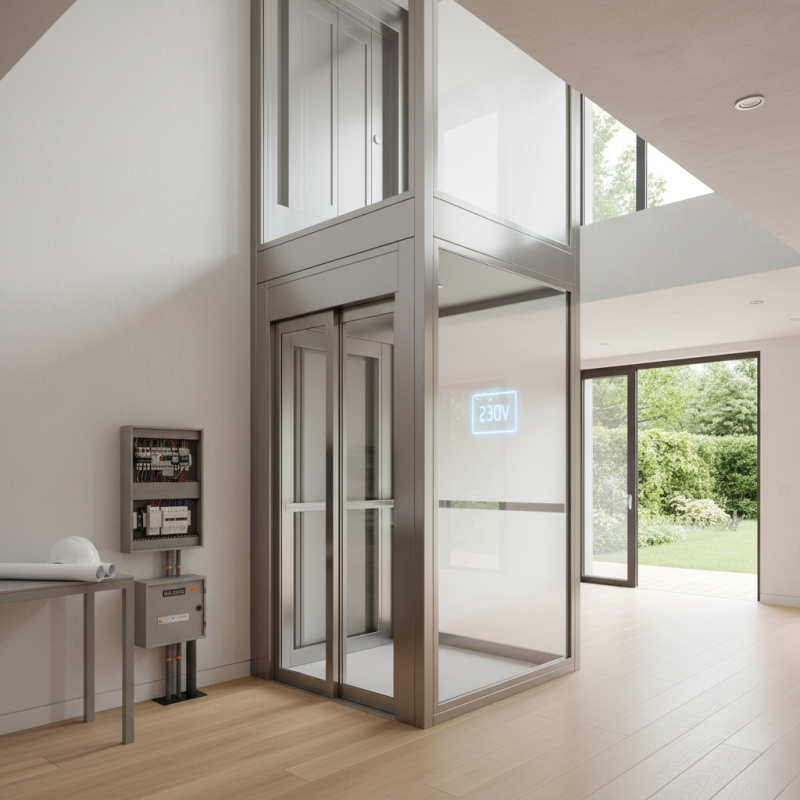
When selecting a home elevator, understanding its energy needs is crucial. Different types of elevators come with varying power requirements. For instance, hydraulic elevators typically consume more power due to the need for fluid movement. These systems offer smooth rides but can increase your electric bill.
In contrast, traction elevators, which often use pulleys, tend to be more energy-efficient. They may require less electricity, making them a popular choice for many homeowners. Some newer models incorporate regenerative drives, which allow them to save energy during operation. However, installation costs might be higher, reflecting advanced technology.
Another option is pneumatic elevators, powered by air pressure. They have unique energy needs but can be eco-friendly and efficient in smaller homes. Understanding these varieties helps homeowners make informed decisions. Balancing energy efficiency with initial costs can be challenging yet essential. Each choice carries its pros and cons, requiring thoughtful consideration of your specific needs.
When considering home elevators, it's crucial to understand their electrical requirements. Home elevators typically need a dedicated power supply. This ensures they operate efficiently and safely. Most residential elevators require a standard voltage of 120 or 240 volts. The specific requirements may vary based on the model and type.
Adequate electrical circuits are necessary. They prevent overloads and ensure reliable operation. It's important to consult a qualified electrician. They can assess your home’s capacity and requirements. Some installations may also need backup power solutions. This can prevent disruption during power outages.
Tips: Always check the power source location. Avoid installing the elevator near water sources. Regular maintenance is essential to ensure safety and functionality. Consider scheduling annual inspections with a professional. They can identify potential issues early. This proactive approach minimizes future costs.
| Type of Elevator | Power Requirements (kW) | Voltage Rating (V) | Phase Type | Control System Type |
|---|---|---|---|---|
| Hydraulic Elevators | 3.0 - 5.0 | 230/400 | Single/Three Phase | Relay/PLC |
| Traction Elevators | 5.0 - 7.5 | 230/400 | Single/Three Phase | Microprocessor |
| Vacuum Elevators | 1.5 - 2.0 | 230 | Single Phase | Simple Control |
| Pneumatic Elevators | 1.0 - 1.5 | 230 | Single Phase | Electronic Controls |
Power consumption in residential elevators is influenced by several key factors. The type of elevator system plays a significant role.
Hydraulic, traction, and pneumatic systems each have distinct power requirements. For instance, hydraulic elevators need a pump system that consumes additional energy.
On the other hand, traction elevators, which rely on cables, often have lower energy demands.
Another influential factor is the elevator's load capacity. An elevator designed for heavier loads will generally require more power. The frequency of use also matters. Frequent travel leads to increased energy consumption, as the motor runs more often. Moreover, the efficiency of the motor itself affects overall power requirements.
Older systems may underperform compared to modern, energy-efficient models.
Lastly, the building's design impacts energy needs. Elevators traveling longer distances require more energy. Also, the installation of regenerative drives can significantly lower energy consumption. However, the initial cost of such upgrades may lead to financial hesitation. Each of these factors warrants careful consideration when selecting a residential elevator system.
When considering the power requirements for home elevators, understanding electricity costs is crucial. Home elevators typically use 220-240 volts. This voltage is standard for most residential systems. Depending on the model, a home elevator may consume anywhere from 1,500 to 2,000 watts during operation. These specifications can vary widely, depending on the type and manufacturer.
Estimating the cost of electricity for your home elevator requires some calculations. For instance, if the elevator uses 2,000 watts and operates for an hour each day, it would consume 2 kilowatt-hours (kWh) of energy. With electricity prices averaging about $0.12 per kWh, this translates to $0.24 a day or roughly $7.20 a month. These are estimated figures—actual costs can fluctuate based on location and utility rates. It is essential to review your specific energy plan.
Residential elevators may also require additional power for lighting and control systems. This extra load can increase electricity costs. Also, if the elevator is used more frequently, expenses will rise. Homeowners need to balance convenience and cost. Estimating these costs accurately can be tricky. Regularly monitoring energy usage can help provide insights into actual consumption. This practice can enhance budgeting for household expenses.
When considering home elevators, safety standards are paramount. According to the National Elevator Industry, the power supply for residential elevators must comply with specific regulations to ensure safe operation. Elevators generally need a dedicated circuit, often requiring a 20-amp breaker for reliable power output. This ensures that the elevator operates smoothly without power interruptions, which can limit functionality.
Compliance with the Americans with Disabilities Act (ADA) is critical when planning installation. Elevators must provide an adequate power source that supports emergency systems, including lights and alarms. According to a report from the International Code Council (ICC), backup power options should be considered, especially for elevators in multi-story residences. Incorporating a battery backup can provide necessary power during outages or emergencies.
Yet, homeowners must understand that local building codes vary. Some areas may demand more stringent requirements, providing a challenge for installation. Balancing local regulations with safety standards can often lead to confusion. Professionals recommend consulting with certified elevator technicians to navigate these complexities. This way, homeowners can ensure their installations are not just compliant but also genuinely safe for use.
: Home elevators typically need a dedicated power supply of 120 or 240 volts. Consult an electrician for details.
A dedicated power supply ensures efficient and safe operation. It prevents potential overloads during use.
Different systems, like hydraulic and traction, have varying energy demands. Hydraulic systems generally consume more energy than traction ones.
Power consumption, load capacity, and frequency of use all impact costs. Heavier loads and more frequent use increase expenses.
Calculate the power usage. For example, 2,000 watts used for an hour costs about $0.24 daily.
Backup power prevents disruptions during outages, keeping your elevator functional and safe.
Regular maintenance and scheduling inspections can help identify issues. Efficient systems can also lower operational costs.
Check the power source location and avoid water proximity. Regular maintenance is key for safety and efficiency.
Yes, longer travel distances increase energy consumption. Consider this when selecting an elevator model.
Regular monitoring of the elevator’s energy consumption can help with budgeting and identify potential issues early.
The article "What Are the Power Requirements for Home Elevators?" delves into essential information regarding the energy needs of residential elevators. It begins by exploring the various types of home elevators, each with distinct energy requirements based on their design and mechanism. Understanding the electrical requirements is crucial, as it lays the foundation for safe installation and operation. Factors such as the elevator's weight capacity, travel distance, and usage frequency significantly influence power consumption, making it vital for homeowners to consider these elements when planning for a domestic lift.
Additionally, the article provides insights into estimating the cost of electricity associated with operating a home elevator, which can vary widely depending on the specific model and usage patterns. Finally, it highlights the importance of adhering to safety standards and regulations concerning elevator power supply, ensuring not only efficient operation but also the safety of users. Overall, comprehending "what are the power requirements for a domestic lift" is integral for informed decision-making and optimal performance of home elevators.
