Dave Lift Dave Lift

Why Choose Screw Driven Lifts Over Hydraulic Lifts in 2026?

Time:2026-06-01 Author:Oliver
0%

In the growing landscape of vertical transportation, "Why choose a screw-driven lift over hydraulic" is a crucial question. Industry reports indicate that screw-driven lifts have gained popularity due to their efficiency and lower maintenance costs. According to a 2023 market analysis by Research and Markets, screw-driven mechanisms require 40% less energy compared to hydraulic systems. This not only translates to cost savings but also aligns with sustainability goals.

Screw-driven lifts also offer enhanced safety features. They have fewer moving parts, reducing the chances of mechanical failures. A study from the International Journal of Elevator Engineering highlighted that screw-driven lifts experience 30% fewer malfunctions than hydraulic lifts. However, this does not mean they are without challenges. Installation can be more complex, and initial costs may be higher, leading to some hesitation among initial adopters.

Evaluating these factors reveals a nuanced picture. While hydraulic lifts may still hold a significant market share, the trend is shifting. In 2026, decision-makers must weigh the benefits of screw-driven systems against the traditional hydraulic models, understanding that this choice could redefine their operational efficiency and safety strategies.
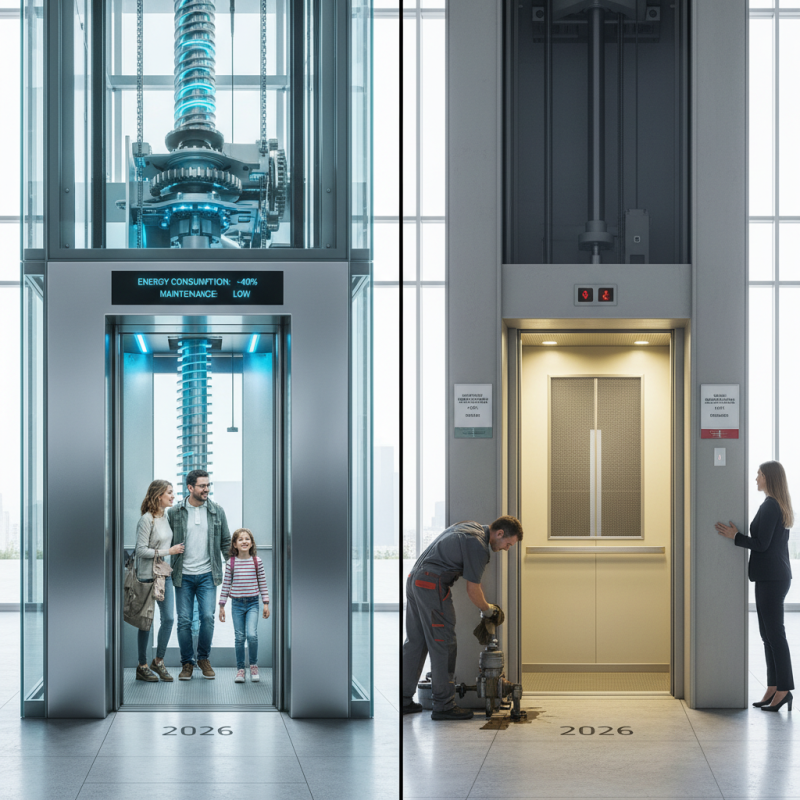
Why Choose Screw Driven Lifts Over Hydraulic Lifts in 2026?

Advantages of Screw-Driven Lifts in 2026: A Comparative Overview

Screw-driven lifts are gaining attention for their operational efficiency and reliability. According to the National Elevator Industry, screw-driven systems have lower maintenance costs, often 30% cheaper than hydraulic lifts. This means fewer service calls and reduced downtime for buildings. For urban projects, this efficiency translates into significant savings over time.

Another advantage is the environmental impact. Screw-driven lifts consume less energy, with estimates showing up to a 25% reduction compared to hydraulic systems. They also use no hydraulic fluid, eliminating the risk of leaks—a crucial factor for eco-conscious developments. This aspect of sustainability resonates well with modern construction practices, reflecting an industry's shift towards greener solutions.

However, screw-driven lifts may not be suitable for all scenarios. Their speed can be lower, making them less ideal for high-rise buildings. Some engineers express concerns about their load capacity at extreme heights. While they excel in certain applications, selecting the right type remains a critical consideration. Each project has unique needs, and a thorough evaluation of requirements is essential.

Why Choose Screw Driven Lifts Over Hydraulic Lifts in 2026? - Advantages of Screw-Driven Lifts in 2026: A Comparative Overview

Feature Screw-Driven Lifts Hydraulic Lifts
Efficiency Higher energy efficiency due to direct drive Potential for higher energy consumption
Maintenance Lower maintenance costs with fewer moving parts Higher maintenance due to hydraulic fluid leakage risks
Environmental Impact More environmentally friendly with less fluid use Risk of hydraulic fluid disposal issues
Operational Speed Moderate speed with smooth operation Generally faster lifting speeds
Space Requirement Takes less space, suitable for tight areas Requires more space for hydraulic pumps

Cost Efficiency of Screw-Driven Lifts vs. Hydraulic Lifts in Modern Usage

Screw-driven lifts are gaining popularity in various industries due to their cost efficiency. Unlike hydraulic lifts, which require complex hydraulic systems, screw-driven lifts operate using a simple motor and screw mechanism. This design results in lower initial setup costs. Additionally, maintenance expenses tend to be reduced, as there are fewer components to service.

Operating costs also favor screw-driven lifts. Their energy consumption is generally lower compared to hydraulic systems. This is because screw lifts use direct drive systems that minimize energy loss. Users can experience tangible savings over time. Furthermore, municipalities and businesses focused on sustainability may find screw-driven lifts appealing due to their energy efficiency.

Tip: Consider the operational environment when choosing a lift. For heavy-load applications, screw-driven lifts might show better longevity. However, if rapid movement is essential, hydraulic lifts could be considered despite higher costs.

Remember to evaluate long-term operational expenses, not just initial costs. Sometimes, the more complex hydraulic lifts may offer speed benefits that justify their higher prices, but careful analysis is crucial. Always seek expert advice tailored to your specific needs when making such decisions.

Energy Consumption: How Screw-Driven Lifts Offer Sustainable Solutions

Screw-driven lifts are gaining traction in 2026 due to their sustainable energy consumption. Unlike traditional hydraulic lifts, which rely on fluid pressure, screw-driven systems use electric motors and screws. This method significantly reduces energy use, promoting environmental responsibility. Efficiency is key, and screw-driven systems often consume less power, even during peak usage.


The compact design also reduces the operational footprint. This means less energy is needed for installation and maintenance. However, some may argue that initial costs can be higher. Yet, the long-term savings on electricity can outweigh these concerns. Industry professionals suggest that lower energy consumption translates to reduced operational costs over time.


Users may face a learning curve with technology adaptation. Education and training are essential for proper utilization. Still, the commitment to sustainability in screw-driven lift systems makes them a compelling choice for the future. As society shifts towards greener solutions, this innovation will likely lead the charge in elevator technology.

Maintenance Needs: Comparing Lifespan and Repair of Screw-Driven and Hydraulic

When considering maintenance needs, screw-driven lifts stand out against hydraulic lifts. Data from industry reports show that screw-driven lifts typically have a longer lifespan, averaging around 20-25 years. This increased durability translates into fewer repairs over time, making them a cost-effective choice for long-term use.

On the other hand, hydraulic lifts usually require more frequent maintenance. Their parts are subject to wear and tear due to the high-pressure fluid systems they utilize. Research indicates that hydraulic lifts may require servicing every 6-12 months. This can lead to significant downtime, resulting in higher operational costs.

Moreover, screw-driven lifts have fewer components that can fail compared to hydraulic models. Their simpler mechanism simplifies repairs and reduces the need for specialized technicians. This reliability is crucial for facilities where continuous operation is essential. Companies must weigh these factors carefully when investing in lift systems.

Safety Features: Analyzing the Reliability of Screw-Driven Lifts in 2026

Screw-driven lifts are gaining attention for their safety features. They offer a reliable alternative to hydraulic lifts in various settings, especially in 2026. One primary advantage is their mechanical design, which minimizes the risk of fluid leaks. The absence of hydraulic fluids reduces the chances of environmental hazards. This simplicity can often lead to enhanced safety for users.


Moreover, screw-driven lifts are designed with fail-safe mechanisms. These systems engage if a malfunction occurs. Users can trust that, even in emergencies, these lifts will function reliably. Regular maintenance can prevent issues, emphasizing the importance of ongoing inspections. However, some may question the long-term durability of screw-driven mechanisms compared to their hydraulic counterparts.


The learning curve in operating screw-driven lifts is another consideration. Training staff properly is crucial for optimal safety. Unexpected challenges might arise during operation. Ongoing education helps address these concerns and builds a culture of safety. While screw-driven lifts have many advantages, there is room for improvement, particularly in user training and awareness.

FAQS

: What are the main advantages of screw-driven lifts?

: Screw-driven lifts are cost-efficient. They have lower initial setup costs and reduced maintenance expenses.

How do screw-driven lifts compare to hydraulic lifts in terms of energy efficiency?

Screw-driven lifts generally consume less energy. Their direct drive systems minimize energy loss.

Are screw-driven lifts safe to use?

Yes, they offer reliable safety features. Their design reduces risks of fluid leaks and includes fail-safe mechanisms.

What should be considered when choosing a lift type?

Evaluate the operational environment. Heavy-load applications might suit screw-driven lifts better.

Is training necessary for using screw-driven lifts?

Yes, proper training is crucial for safety. Staff education can help manage unexpected operational challenges.

Do screw-driven lifts have any disadvantages?

There may be concerns about long-term durability. Further user training and awareness could improve safety.

How can long-term costs influence the choice of lift?

Consider ongoing operational expenses. Sometimes hydraulic lifts may justify their higher costs through speed benefits.

What happens in case of a malfunction with screw-driven lifts?

Fail-safe mechanisms engage to ensure reliable operation even during emergencies. Regular maintenance is key to preventing issues.

Conclusion

In 2026, the decision to choose screw-driven lifts over hydraulic lifts is increasingly influenced by several key factors. Screw-driven lifts offer significant advantages in terms of cost efficiency, presenting a more affordable option for modern usage while minimizing long-term operational expenses. Additionally, these lifts consume less energy, making them a sustainable choice that aligns with contemporary environmental standards.

Maintenance needs are another critical aspect, as screw-driven lifts generally exhibit a longer lifespan and lower repair frequency compared to their hydraulic counterparts. Finally, the safety features of screw-driven lifts are designed to enhance reliability, providing users with confidence in their operations. All these factors contribute to the question, "Why choose a screw-driven lift over hydraulic?"—highlighting their relevance in current and future lift technology.

Oliver

Oliver

Oliver is a seasoned marketing professional with a wealth of expertise in driving brand awareness and engagement. With a deep understanding of our company's product offerings, he consistently delivers high-quality content that enriches our professional blog. His insights not only shed light on......