Dave Lift Dave Lift

Why Choose a Screw Driven Lift Over Hydraulic?

Time:2026-10-14 Author:Charlotte
0%

Why choose a screw-driven lift over hydraulic? The answer begins with the building, not the machine. Low-rise homes, clinics, shops, and accessibility projects often need dependable vertical movement within tight spaces. Screw-driven lifts use a threaded drive system rather than hydraulic oil, pumps, and cylinders. That difference can simplify installation and reduce concerns about oil leakage. A small lift. A practical advantage.

The International Energy Agency reports that buildings consume about 30% of global energy and create approximately 26% of energy-related emissions from operations. These figures make equipment efficiency and maintenance increasingly important. However, energy performance depends on usage, travel distance, load, and standby time. ISO 25745-2 provides a recognized method for evaluating lift energy performance, while EN 81-41 addresses vertical lifting platforms for people with reduced mobility. These standards support a measured comparison, rather than a sales-driven promise.

In field assessments, technicians often value screw-driven systems for compact layouts, consistent low-speed movement, and easier visual access to mechanical components. Hydraulic lifts can remain suitable for heavier loads, frequent service, or certain commercial designs. The answer is not absolute. Screw mechanisms may produce operating noise, require periodic lubrication, and face duty-cycle limitations. Some installations also need careful alignment and protection from moisture. Those weaknesses matter.

Still, when a project prioritizes clean operation, modest travel heights, limited excavation, and straightforward servicing, a screw-driven lift can be the more balanced choice. The best decision comes from verified load calculations, duty-cycle data, local code review, and a maintenance plan—not from technology preference alone.
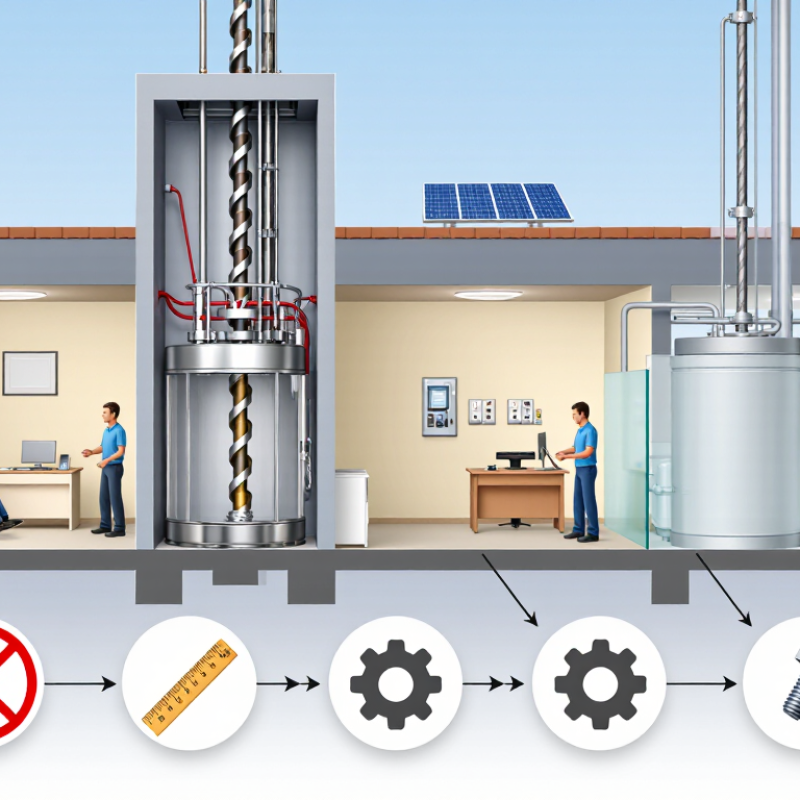
Why Choose a Screw Driven Lift Over Hydraulic?

How Screw-Driven Lifts Work

A screw-driven lift raises a platform through controlled rotation, not fluid pressure. An electric motor turns a vertical screw, while a traveling nut moves along its threads. The nut connects to the lifting platform. As the screw rotates, the nut travels upward or downward with predictable movement. This direct mechanism makes the lifting process easy to observe and measure.

In maintenance inspections, technicians check thread wear, lubrication, alignment, and unusual vibration. A dry screw may produce noise and increase friction. Misalignment can place uneven stress on the nut and guide rails.

Limit switches stop travel at selected heights, while mechanical brakes help hold the platform during operation. Some designs also use multiple screws, linked by shafts or electronic controls, to keep the platform level.

Screw-driven lifts can offer clean operation because they do not require hydraulic oil, pumps, or pressure hoses. They are often suitable for indoor parking systems, workshops, and accessibility applications. However, they are not maintenance-free. Slow travel may frustrate users who expect hydraulic speed. Heat can build during repeated cycles, especially under heavy loads. A common design mistake is choosing capacity without considering duty frequency. Load distribution matters too. One concentrated load can challenge the guides, even when the total weight seems acceptable. Careful installation, scheduled inspections, and accurate load data remain essential.

Key Differences Between Screw-Driven and Hydraulic Lifts

Why Choose a Screw Driven Lift Over Hydraulic?

Key Differences Between Screw-Driven and Hydraulic Lifts

A screw-driven lift converts motor rotation into vertical movement through a threaded screw and nut. Its mechanical connection supports precise positioning, which helps when platforms must stop at exact working heights. Hydraulic lifts use pressurized fluid inside cylinders. They often provide strong lifting force and smooth movement, especially with heavy loads.

The difference becomes clearer during daily operation. Screw-driven systems do not need hydraulic oil, so they reduce leak concerns around clean floors and stored materials. They also hold position through their mechanical design, although proper safety locks remain essential. Hydraulic equipment can move heavy loads efficiently, but it needs pumps, hoses, valves, and regular fluid inspections. A damaged hose may create downtime and a safety hazard.

In practical site checks, screw-driven lifts often suit low-rise access, controlled travel, and moderate duty cycles. Their speed may feel limited. That trade-off is easy to underestimate. Thread wear, lubrication, alignment, and nut condition require documented inspections. Hydraulic lifts may be preferable where lifting capacity and frequent cycling matter more than clean operation. Neither system is automatically safer. Correct guarding, load limits, emergency controls, and scheduled maintenance determine real performance. I would compare duty cycle, travel height, floor conditions, noise tolerance, and service access before selecting either design. The cheapest option can become expensive when maintenance access is poor.

Advantages of Screw-Driven Lift Performance

Why Choose a Screw Driven Lift Over Hydraulic?

Screw-driven lifts deliver controlled, repeatable movement through a precision screw and nut assembly. That mechanical action supports smooth starts, accurate stops, and stable positioning. In daily operation, an operator can raise a platform to a set height without hydraulic fluid, pumps, or hoses. The result is a cleaner installation, especially in workshops where leaks create slippery floors and costly interruptions.

Performance remains consistent across frequent cycles. A well-designed screw system handles vertical loads with predictable force and limited drift when power is removed. It also offers quiet operation in enclosed facilities, although actual noise depends on motor selection, alignment, and load. Maintenance is practical: technicians inspect lubrication, fasteners, guides, and wear patterns during scheduled service. Those checks reveal problems early.

From field experience, the strongest advantage is control rather than raw lifting speed. Screw-driven equipment suits inspection benches, production lines, and accessibility platforms requiring precise travel. It can reduce fluid-related maintenance, but it is not maintenance-free. Overloading, poor alignment, or neglected lubrication may accelerate wear and produce uneven motion. I would not choose one solely from a brochure. Measure cycle frequency, duty load, travel distance, and available power before specifying the system. That evaluation may expose a less obvious issue: some applications need faster movement than a screw mechanism should provide.

Why Choose a Screw-Driven Lift Over Hydraulic?

Advantages of screw-driven lift performance compared with conventional hydraulic systems

This engineering comparison uses a normalized 1–5 scale to show typical design tendencies rather than manufacturer specifications. Screw-driven lifts generally provide precise positioning, stable mechanical load holding, and predictable motion, while hydraulic systems are often preferred for high-force applications and fast movement.

Safety, Maintenance, and Operating Requirements

A screw driven lift can reduce hydraulic risks, but it is not automatically safer. Its lifting force comes through screws, nuts, gears, and mechanical synchronization. There are no pressurized oil hoses beneath the platform. That matters in a clean workshop, where one small leak can contaminate floors and create a slipping hazard. Still, worn load nuts can fail quietly. That detail is easy to miss.

Safety depends on operating discipline. The U.S. Bureau of Labor Statistics recorded 5,283 fatal workplace injuries in 2023, although this figure is not specific to lifting equipment. It reinforces one point: stored energy requires control. Operators should confirm the rated load, keep people outside the travel zone, test interlocks, and use physical supports before entering the area. Lockout and tagout procedures remain essential during inspection, even when the lift appears fully lowered.

Maintenance is different, not absent. Screw assemblies need scheduled lubrication, alignment checks, backlash measurement, and inspection for thread damage. Hydraulic lifts require hose, seal, valve, and fluid checks. Both systems need documented inspections by competent personnel. The HSE reported 138 worker deaths in Great Britain during 2023/24, showing why informal checks are insufficient. A practical routine includes listening for uneven motor sounds, watching platform level during travel, and recording small changes. Some operators skip lubrication. That is a costly mistake. Operating requirements must follow the manufacturer’s instructions, applicable standards, and the actual workplace risk assessment.

Choosing the Right Lift for Specific Applications

Why Choose a Screw Driven Lift Over Hydraulic?

Choosing the right lift starts with the application, not the lifting method. A screw driven lift suits tasks requiring accurate positioning, repeatable movement, and controlled stopping. It can hold a platform firmly when power is removed, depending on the system design and safety controls. This matters on production lines where fixtures must return to the same height each cycle. Space matters. Screw systems often avoid hydraulic tanks, hoses, and fluid lines. That can simplify installation in clean indoor areas.

Hydraulic lifts remain useful for heavy loads, frequent movement, and applications needing high force in limited lifting time. They can handle demanding platforms, vehicle service equipment, and material handling stations. However, designers must consider fluid leaks, temperature changes, pump noise, and regular maintenance. A screw lift may require more time to reach full travel. It also needs proper lubrication and inspection for thread wear. That trade-off is easy to overlook.

In practical selection work, I compare load weight, travel distance, cycle frequency, speed, platform size, and operating environment. A dusty workshop may require stronger protection than a clean assembly room. A lift used twice daily has different needs from one cycling every minute. I have seen projects choose precision when speed was the real priority. That mistake can increase cost without improving production. The safest decision follows measured operating data, manufacturer specifications, guarding requirements, and a realistic maintenance plan.

Why Choose a Screw Driven Lift Over Hydraulic? - Choosing the Right Lift for Specific Applications

Evaluation Dimension Screw-Driven Lift Hydraulic Lift Application Guidance
Operating Principle An electric motor rotates a screw or threaded lifting mechanism to raise and lower the platform through direct mechanical transmission. An electric or engine-driven pump pressurizes hydraulic fluid, which moves a cylinder connected to the lifting structure. Choose the screw system when direct mechanical control and a clean installation are important; choose hydraulic power when high force and compact cylinders are priorities.
Positioning Accuracy Typically offers precise, repeatable positioning because travel is directly related to screw rotation and motor control. Can provide accurate positioning, but performance may be affected by fluid compressibility, temperature, valve control, and cylinder drift. Screw-driven designs are generally better for assembly stations, inspection platforms, and applications requiring repeatable heights.
Load-Holding Behavior Some screw mechanisms can resist back-driving, depending on screw geometry, load, lubrication, and design. A mechanical brake or safety lock may still be required. The cylinder can hold a load while hydraulic pressure is maintained, but pressure loss or valve leakage can cause movement. Mechanical safety devices are commonly required. For either technology, use the manufacturer’s rated load-holding system and never rely on motor torque or hydraulic pressure alone for personnel safety.
Speed and Duty Cycle Usually well suited to controlled, moderate-speed lifting. Continuous high-speed or high-cycle operation requires correct screw, nut, motor, and thermal sizing. Can deliver high force and fast movement, especially with appropriately sized pumps, cylinders, and valves. Heat generation must be managed during frequent cycles. Select the system based on required cycles per hour, travel speed, duty cycle, and heat dissipation—not lifting force alone.
Maintenance Requirements Maintenance generally focuses on screw and nut lubrication, alignment, wear inspection, fasteners, guides, brakes, and electrical components. Requires inspection of fluid level and condition, hoses, fittings, seals, valves, filters, cylinders, and pump components. A screw-driven lift may simplify maintenance where hydraulic-fluid management is undesirable, but its wear parts still need scheduled inspection.
Leakage and Cleanliness Does not require hydraulic oil, so there is no hydraulic-fluid leakage risk. Lubricants used on the screw mechanism may still need containment. Uses hydraulic fluid, creating potential leakage, contamination, and cleanup concerns if hoses, seals, fittings, or cylinders fail. Screw-driven lifts are often preferable in clean manufacturing, food-related, laboratory, and indoor environments when the design meets applicable hygiene requirements.
Noise and Environmental Conditions Noise mainly comes from the motor, gearbox, screw, guides, and braking system. Performance depends on lubrication, alignment, temperature, dust, and corrosion protection. Noise is commonly produced by the pump, motor, valves, and fluid flow. Fluid viscosity and ambient temperature can influence performance. Evaluate measured sound levels, enclosure requirements, ambient temperature, washdown exposure, dust, and corrosion before selecting either technology.
Installation and Layout Often uses an electric drive, screw assemblies, guides, and control equipment. It can avoid a separate hydraulic reservoir and long fluid lines. May require space for a pump unit, reservoir, hoses, valves, and filtration, although cylinders can fit into compact lifting structures. Use a screw-driven layout when minimizing hydraulic infrastructure is valuable; use hydraulics when cylinder geometry simplifies the machine design.
Best Overall Fit Clean, electrically controlled, repeatable lifting applications with moderate speed requirements and accessible screw mechanisms. High-force applications, heavy platforms, rugged environments, and systems where hydraulic power is already available and properly maintained. Base the final decision on rated load, platform size, stroke, speed, cycle frequency, safety requirements, environment, maintenance capability, and total life-cycle cost.
Selection note: Actual performance depends on the complete lift design, including structure, guides, drive sizing, controls, guarding, overload protection, and applicable local safety standards. Always verify the manufacturer’s rated capacity, duty cycle, and safety instructions for the specific model.

FAQS

How does a screw-driven lift move a platform?

A motor turns a threaded screw and nut assembly. The rotation becomes controlled vertical movement. This supports accurate stopping at selected heights.

How does a hydraulic lift differ from a screw-driven lift?

A hydraulic lift uses pressurized fluid inside cylinders. It often provides strong force and smooth movement. A screw-driven lift uses mechanical engagement instead.

Why might a screw-driven lift suit clean indoor areas?

It does not require hydraulic oil, pumps, or hoses. This reduces leak concerns near stored materials and smooth floors. Cleaner operation helps.

Can a screw-driven lift hold its position after power loss?

Its mechanical design can reduce unwanted movement, depending on the system. Safety locks and guarding remain essential. Never rely on mechanics alone.

What maintenance does a screw-driven lift require?

Inspect lubrication, fasteners, guides, alignment, thread wear, and nut condition. Record findings during scheduled service. It is not maintenance-free.

When is a hydraulic lift more suitable?

Hydraulic equipment may suit heavy loads and frequent cycling. It can deliver high force within limited lifting time. Pumps and fluid systems need inspection.

What information should guide lift selection?

Compare load weight, travel distance, speed, cycle frequency, platform size, and floor conditions. Also check noise tolerance and service access.

Are screw-driven lifts always safer than hydraulic lifts?

No. Real safety depends on load limits, guarding, emergency controls, and maintenance. Neither design deserves automatic trust.

What is a common mistake when choosing a lift?

Some projects choose precision when speed matters more. That choice may raise costs without improving production. I might make that mistake too.

Can screw-driven lifts handle every application?

No. They suit controlled travel and moderate duty cycles. Their speed may feel limited. Measure actual operating demands before choosing one.

Conclusion

Why choose a screw-driven lift over hydraulic systems? A screw-driven lift uses a motor to rotate a precision screw mechanism, converting rotational motion into controlled vertical movement. Unlike hydraulic equipment, it does not rely on pumps, fluid pressure, or hydraulic oil, which can make its operation cleaner, more predictable, and easier to monitor. Its direct mechanical design also supports accurate positioning, smooth travel, and reliable performance in applications where consistent lifting height and repeatable movement are important.

Screw-driven lifts can offer advantages in safety, maintenance, and long-term operation because they reduce the risk of fluid leaks and often require fewer fluid-related service tasks. Their design may also provide dependable load control when properly configured with suitable safety features and regular inspections. However, the best choice depends on load capacity, lifting speed, duty cycle, available space, environmental conditions, and positioning requirements. By comparing these factors carefully, users can select a lift that delivers the right balance of performance, safety, efficiency, and maintenance convenience.

Charlotte

Charlotte

Charlotte is a seasoned marketing professional with a deep understanding of the company's portfolio and a passion for elevating its presence in the market. With a keen eye for detail and a commitment to excellence, she ensures that our professional blog is regularly updated with insightful articles......